
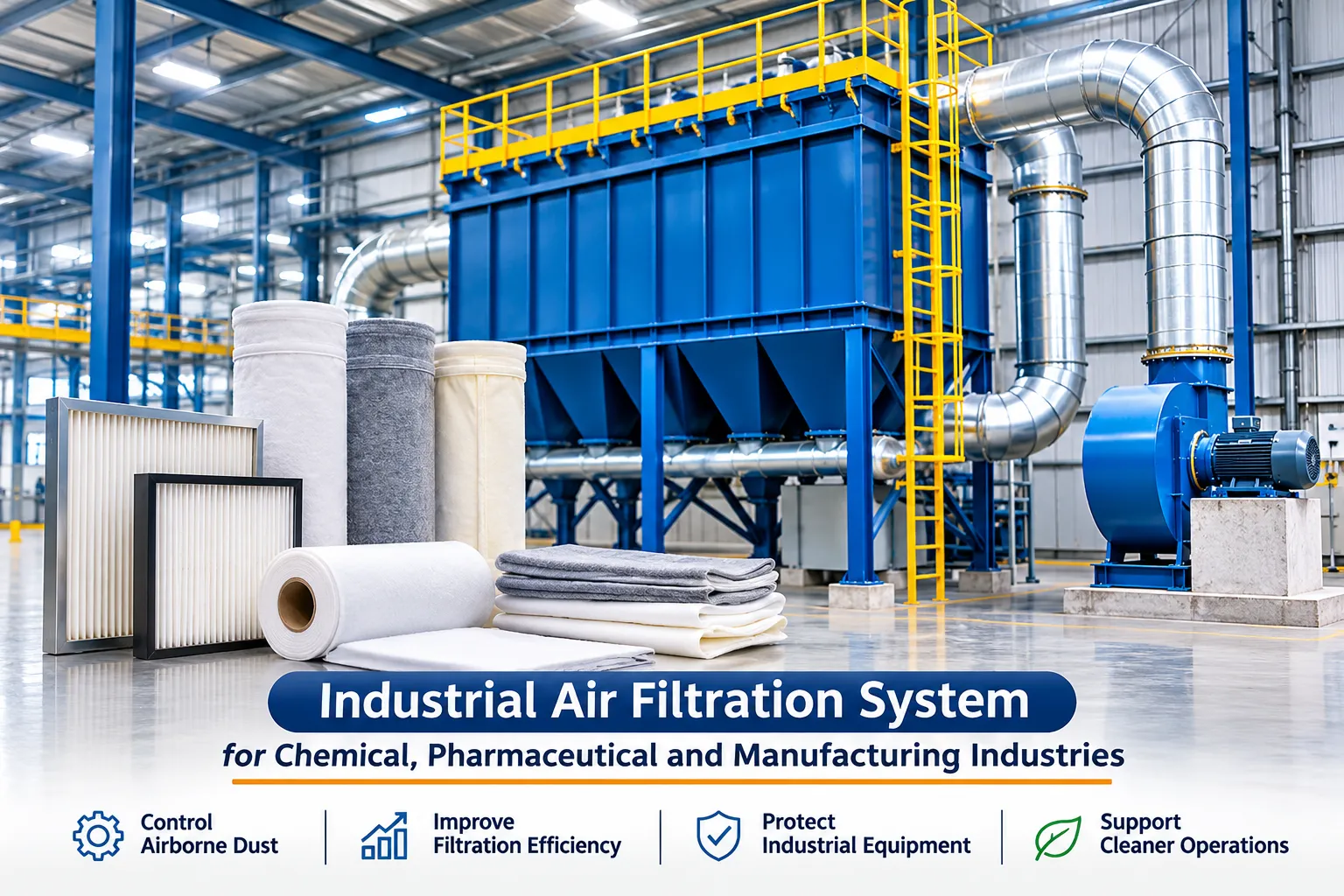
Industrial air filtration plays an important role in maintaining cleaner working environments, controlling airborne particles and supporting efficient industrial operations. Chemical processing units, pharmaceutical manufacturing facilities and general manufacturing plants generate different types of airborne contaminants, including dust, fine powders, process particles and fumes. Without an appropriate filtration arrangement, these contaminants can affect product quality, workplace conditions, equipment performance and production processes.
However, industrial air filtration requirements are not the same for every industry. Factors such as particle characteristics, operating temperature, chemical exposure, airflow conditions and production processes determine the type of filtration system and filter media required.
Understanding these requirements helps industries select suitable filtration solutions that meet their operational needs while maintaining consistent performance.
Why Industrial Air Filtration Is Important in Industrial Facilities
Industrial processes often release airborne particles during material handling, mixing, grinding, drying, packaging and other production activities. If these particles are not properly controlled, they can accumulate around machinery, spread across production areas or enter sensitive manufacturing environments.
A properly designed industrial air filtration arrangement helps address these challenges through effective particulate collection and air treatment.
Some important benefits include:
- Improved workplace air quality: Helps control airborne dust and particles generated during industrial operations.
- Equipment protection: Reduces the accumulation of dust on machinery, electrical components and sensitive equipment.
- Better process control: Helps minimise unwanted particle contamination in production environments.
- Reduced maintenance concerns: Appropriate filtration can help prevent excessive dust accumulation and related equipment problems.
- Consistent industrial operations: Properly selected filtration media supports stable filtration performance under specified operating conditions.
The filtration solution should always be selected according to the actual contaminants, process conditions and applicable industry requirements.
Industrial Air Filtration Requirements Across Different Industries
Different industries generate different types of airborne contaminants. Therefore, understanding the specific requirements of each application is essential before selecting filtration equipment or filter media.
1. Chemical Industry: Handling Dust, Powders and Chemical Exposure
Chemical manufacturing facilities handle a wide range of raw materials, powders, chemical compounds and intermediate products. Processes such as material transfer, blending, drying, grinding and packaging can generate airborne particles that require appropriate collection and filtration.
One of the major challenges in chemical plants is the variation in chemical composition and operating conditions. Certain processes may expose filter media to moisture, acidic or alkaline environments, elevated temperatures or chemically aggressive substances.
Important filtration considerations include:
- Chemical compatibility: Filter media should be compatible with the chemicals and process gases to which it is exposed.
- Temperature resistance: The material must withstand the normal operating temperature and any expected temperature fluctuations.
- Dust characteristics: Particle size, abrasiveness and dust loading influence filter selection.
- Moisture management: Condensation and humidity should be considered to avoid unnecessary filter blinding.
- Mechanical durability: Filter elements should withstand the operating conditions and cleaning cycles of the filtration system.
Polypropylene, polyester, acrylic and other technical filter materials may be considered depending on the chemical environment and operating requirements.
For chemical plants, selecting a filter solely by its material name is not sufficient. The complete process environment must be evaluated before deciding on the appropriate filtration solution.
2. Pharmaceutical Industry: Controlling Fine Powder and Particulate Contamination
Pharmaceutical manufacturing requires careful control of environmental and process conditions. Activities such as powder processing, blending, granulation, tablet manufacturing, drying and material transfer can release fine airborne particles.
These particles may affect product handling, housekeeping and the cleanliness of manufacturing areas if they are not adequately controlled.
Industrial air filtration in pharmaceutical facilities should consider the following factors:
- Fine particle collection: Filtration arrangements should be suitable for the particle size and characteristics of the generated powder.
- Cross-contamination control: Appropriate dust collection and containment practices help minimise unwanted material transfer between process areas.
- Material compatibility: Filter media should be suitable for the process environment and any cleaning or sanitisation requirements.
- Static electricity control: Certain fine powders may require antistatic considerations based on their properties and the equipment design.
- Maintenance and replacement: Filter elements should be accessible for inspection and replacement according to the facility’s procedures.
Pharmaceutical applications may also require compliance with specific cleanroom, occupational exposure and process-containment requirements. A dust collector filter bag should not be treated as a substitute for a validated cleanroom or HEPA filtration system where those systems are required.
Selecting the right filtration arrangement requires coordination between production, engineering, maintenance and quality teams.
3. General Manufacturing Industry: Managing Process Dust and Airborne Particles
Manufacturing plants involve several activities that can generate dust and airborne contaminants. Grinding, cutting, polishing, machining, material handling and surface finishing are common sources of industrial particulate emissions.
The type and quantity of generated dust can vary significantly depending on the materials and production methods used.
Common filtration requirements include:
- Dust collection: Capturing airborne particles generated during production activities.
- Abrasion resistance: Selecting filter media that can handle abrasive particles where applicable.
- Airflow management: Maintaining suitable airflow through the filtration system.
- Filter durability: Ensuring the filter construction can withstand operating conditions and repeated cleaning.
- Emission control: Supporting the facility’s applicable environmental and workplace air-quality requirements.
A suitable industrial filtration arrangement can help reduce dust accumulation, support equipment cleanliness and maintain more consistent production conditions.
Common Challenges in Industrial Air Filtration Systems
Even when a filtration system is installed, unsuitable filter media or operating conditions can affect its performance.
Industrial facilities may experience several filtration-related problems over time.
High Differential Pressure
An increase in differential pressure across filter elements can indicate excessive dust accumulation, inadequate cleaning, moisture-related blinding or unsuitable filtration velocity.
Higher pressure drop can increase fan energy requirements and affect the overall operating efficiency of the system.
Frequent Filter Replacement
Premature filter failure can result from incorrect material selection, chemical incompatibility, excessive temperature, abrasion or mechanical stress.
Evaluating the actual operating conditions before selecting replacement filter media can help reduce recurring replacement problems.
Poor Dust Release
In fabric filtration systems, accumulated dust must be removed during the cleaning cycle. If the dust does not release effectively, material can remain on the filter surface and progressively restrict airflow.
The filter fabric, surface finish, dust characteristics and cleaning mechanism should be evaluated together.
Filter Leakage and Particulate Emissions
Damaged seams, incorrect bag dimensions, poor sealing, installation problems or mechanical wear can allow dust to escape from the filtration system.
Regular inspection and appropriate maintenance are important for identifying these issues before they affect the overall process.
Factors to Consider When Selecting Industrial Air Filtration Solutions
Choosing a suitable filtration solution requires more than comparing filter specifications. The filter media and construction should match the actual application.
Here are some important factors that industrial buyers and plant engineers should evaluate.
1. Type of Airborne Contaminants
Identify the type of dust, powder, particulate matter or process contaminants generated during production. Particle size, density, abrasiveness and loading can influence the filtration arrangement.
2. Operating Temperature
Filter materials have different temperature limitations. Both continuous operating temperatures and temporary temperature peaks should be considered during selection.
3. Chemical Compatibility
Chemical exposure can affect the strength and service life of filter media. The material should be evaluated against the actual gas composition, moisture and chemical conditions.
4. Airflow and Filtration Requirements
Airflow volume, filtration velocity and available filter area influence the performance of fabric filtration systems. These parameters should be evaluated alongside the dust characteristics and cleaning method.
5. Filter Media and Construction
The appropriate fabric, surface finish, seam construction, dimensions and fastening arrangement should be selected according to the collector design and operating conditions.
6. Maintenance and Cleaning Method
Pulse-jet, reverse-air and mechanical shaker systems place different demands on filter media. The selected construction should be suitable for the cleaning mechanism and its operating cycle.
The Role of Filter Media in Industrial Air Filtration
Filter media is one of the most important components of a fabric-based industrial filtration system. It determines how airborne particles interact with the filter surface and influences airflow, dust release and filtration performance.
Different technical materials offer different characteristics.
- Polypropylene: Considered for applications requiring resistance to many acids and alkalis, subject to operating temperature and chemical compatibility.
- Polyester: Commonly used for general industrial filtration applications where mechanical strength and dimensional stability are important.
- Acrylic: Suitable for selected applications where its chemical and temperature characteristics match the process conditions.
- Antistatic filter media: Considered for applications where static charge dissipation is required, subject to the overall equipment and safety assessment.
There is no single filter material suitable for every industrial application. The selection should be based on the complete operating environment rather than the material specification alone.
For specialised industrial requirements, working with experienced Industrial Air Filter Manufacturers in India can help businesses evaluate suitable filter media, construction and application requirements.
How Industrial Facilities Can Improve Filtration Performance
Maintaining consistent filtration performance requires regular monitoring and an application-based maintenance approach.
Industrial facilities can consider the following practices:
- Monitor differential pressure: Track pressure-drop variations to identify abnormal filter loading or cleaning issues.
- Inspect filter elements: Check for fabric damage, seam failures, leakage and signs of premature wear.
- Review cleaning cycles: Ensure the cleaning system operates according to the collector’s design and process requirements.
- Evaluate operating conditions: Monitor temperature, moisture, airflow and changes in dust characteristics.
- Plan filter replacement: Use inspection records and operating data to establish suitable replacement schedules.
- Review filtration suitability: Reassess the selected filter media when production processes or operating conditions change.
These practices help maintenance teams identify potential problems and make informed decisions about filter replacement and system improvements.
Industrial Air Filtration Solutions from Rohit Enterprises
Rohit Enterprises has been involved in industrial filtration media manufacturing and supply since 1998, serving industrial requirements from its facility in Ankleshwar, Gujarat.
The company works with technical filter materials and customised filter constructions for different industrial applications, including chemical processing, pharmaceutical manufacturing and general manufacturing operations.
Its filtration product range includes:
- Industrial filter media
- Dust collector filter bags
- Polyester filter media
- Polypropylene filter media
- Acrylic filter media
- Antistatic filter media
- Customised filter bag constructions
Filter selection is based on application requirements such as operating temperature, dust characteristics, chemical exposure, collector dimensions and cleaning arrangements.
Businesses looking for application-specific filtration requirements can explore Rohit Enterprises’ industrial air filter manufacturing solutions to understand the available products and discuss suitable filter media requirements.
Frequently Asked Questions About Industrial Air Filtration
1. What is industrial air filtration?
Industrial air filtration is the process of removing airborne particles, dust and other contaminants from industrial air or process gas streams using suitable filtration equipment and filter media.
2. Why is industrial air filtration important in chemical industries?
Chemical manufacturing processes can generate dust, powders and other airborne particles. Appropriate filtration helps control these contaminants and supports cleaner working conditions, equipment protection and process requirements.
3. What type of air filtration is used in pharmaceutical manufacturing?
Pharmaceutical facilities may use different filtration arrangements depending on the process, including dust collection systems, HVAC filtration, HEPA filtration and specialised containment solutions. The appropriate arrangement depends on cleanliness, product protection and occupational safety requirements.
4. Which filter media is suitable for industrial applications?
Polypropylene, polyester, acrylic and antistatic filter media are among the materials considered for industrial applications. The final selection depends on operating temperature, chemical compatibility, particle characteristics, moisture and cleaning requirements.
5. How does industrial air filtration improve production efficiency?
Appropriate filtration helps control airborne dust, reduce unwanted particle accumulation and protect equipment. Properly selected filter media can also support stable airflow and reduce unnecessary maintenance interruptions.
6. How often should industrial air filters be replaced?
Replacement frequency depends on dust loading, operating temperature, chemical exposure, cleaning cycles and filter condition. Differential pressure monitoring and regular inspections help determine suitable replacement intervals.
7. What should businesses consider before selecting an industrial air filter manufacturer?
Businesses should evaluate the manufacturer’s understanding of industrial applications, available filter materials, customisation capabilities, dimensional accuracy and ability to recommend suitable filtration solutions according to actual operating conditions.
Conclusion
Industrial air filtration is an important requirement across chemical, pharmaceutical and manufacturing industries. However, each industry presents different filtration challenges that require careful consideration of airborne contaminants, operating temperatures, chemical exposure, airflow and filter media characteristics.
Selecting an appropriate filtration solution involves understanding the complete process rather than relying on a single filter specification. Proper material selection, suitable filter construction and regular performance monitoring can help industrial facilities maintain consistent filtration and reduce avoidable operating problems.
Rohit Enterprises, with experience in industrial filtration media since 1998, supports different industrial requirements through technical filter materials and customised filter bag solutions.
For businesses evaluating industrial air filtration requirements, choosing the right filter media and construction is an important step towards dependable filtration performance and efficient industrial operations.